
Service 08 of 08
Civils & Drainage Contractor in Cambridgeshire & Norfolk
Culverts, headwalls, chambers and wet wells for councils, utility companies and developers, built to the engineer's drawing the same as any footing or frame.
What's included
Below-ground work for councils, utilities and developers
Not every job is a house. We've built culvert headwalls that carry live gas mains, water chambers and wet wells for a new housing estate's main supply, gas network chambers, electrical substation bases and interceptor tanks, all to the same standard as a footing or a frame. If it needs excavating, shuttering, reinforcing and pouring below ground, it's work we already do, road closures and traffic management included where the job needs it.
- Culvert headwalls and road culverts
- Chambers, manholes and wet wells
- Interceptor and attenuation tanks
- Electrical substation and gas chamber bases
- Utility pipework, ducting and drainage runs
- Road closures, traffic management and reinstatement
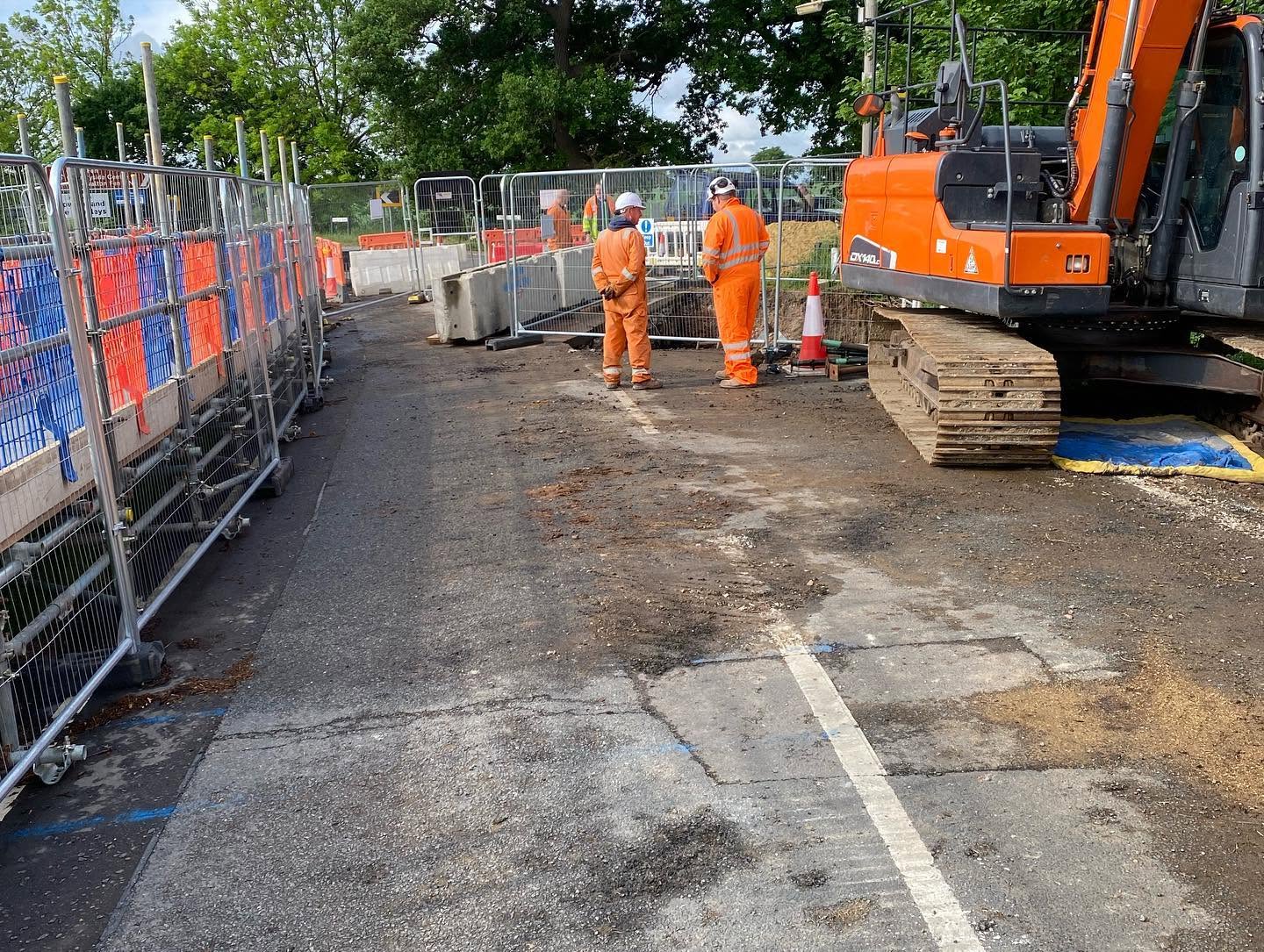
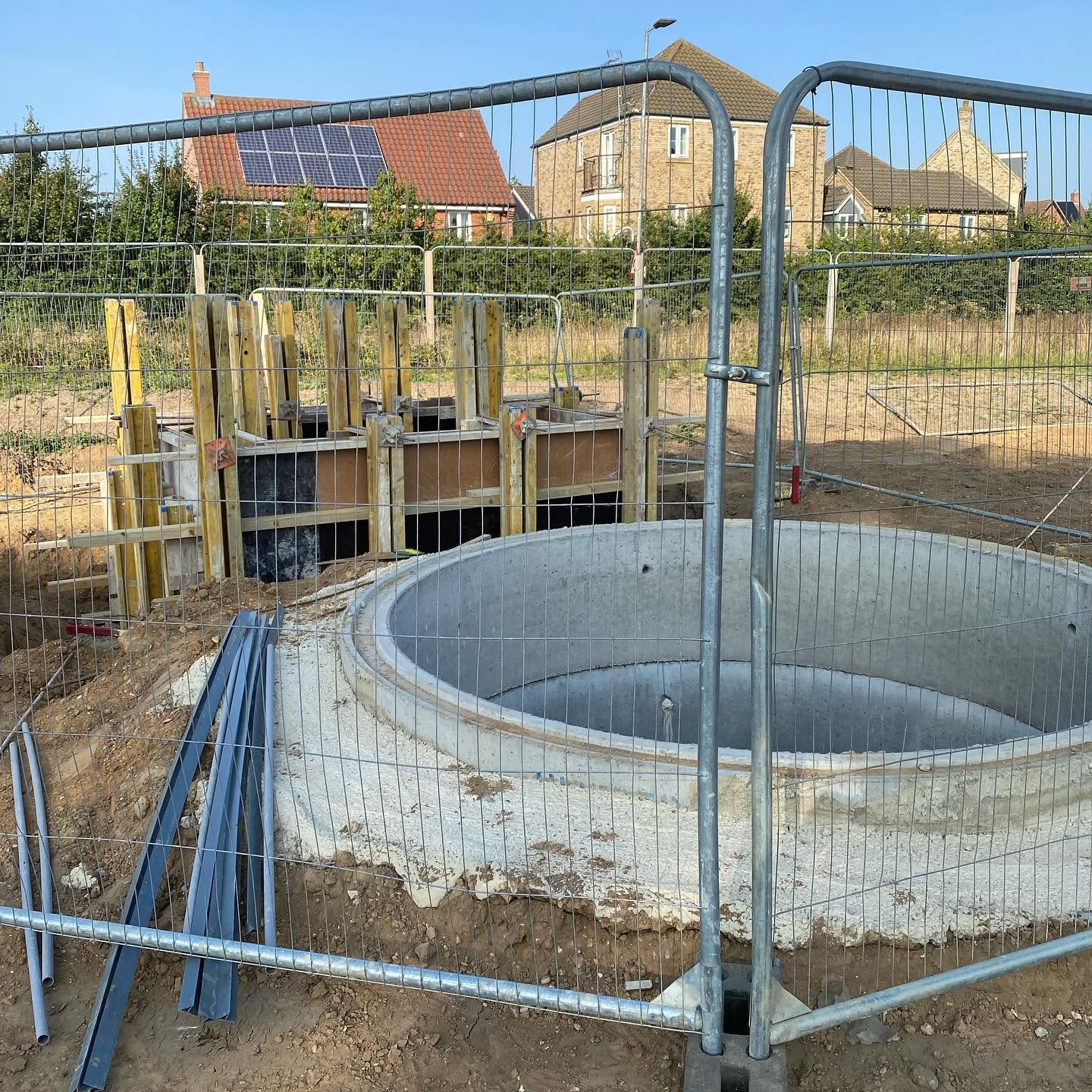
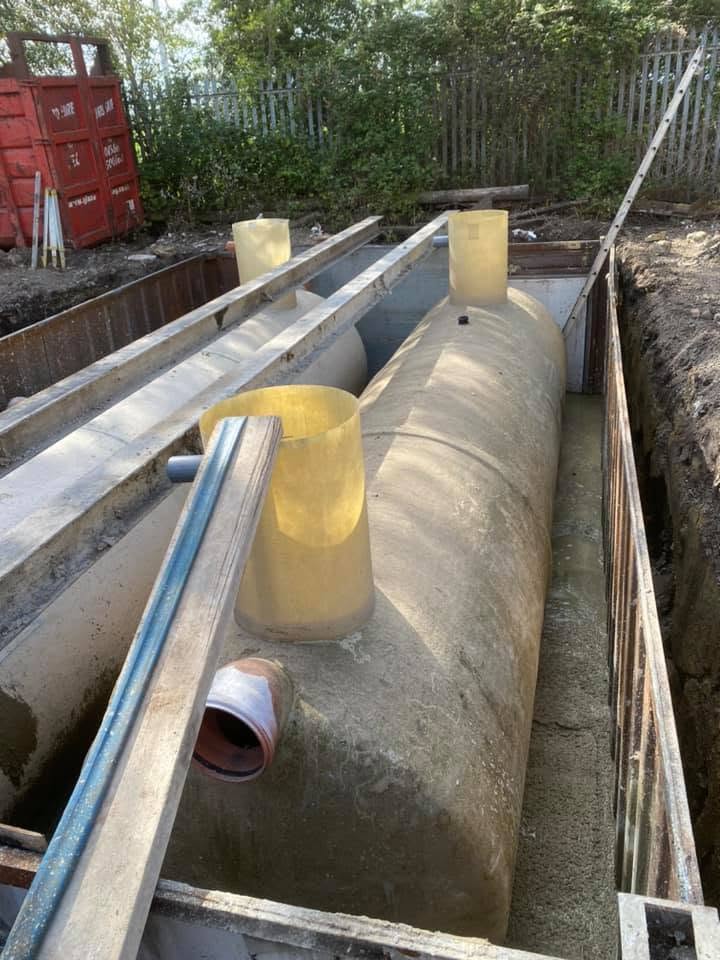
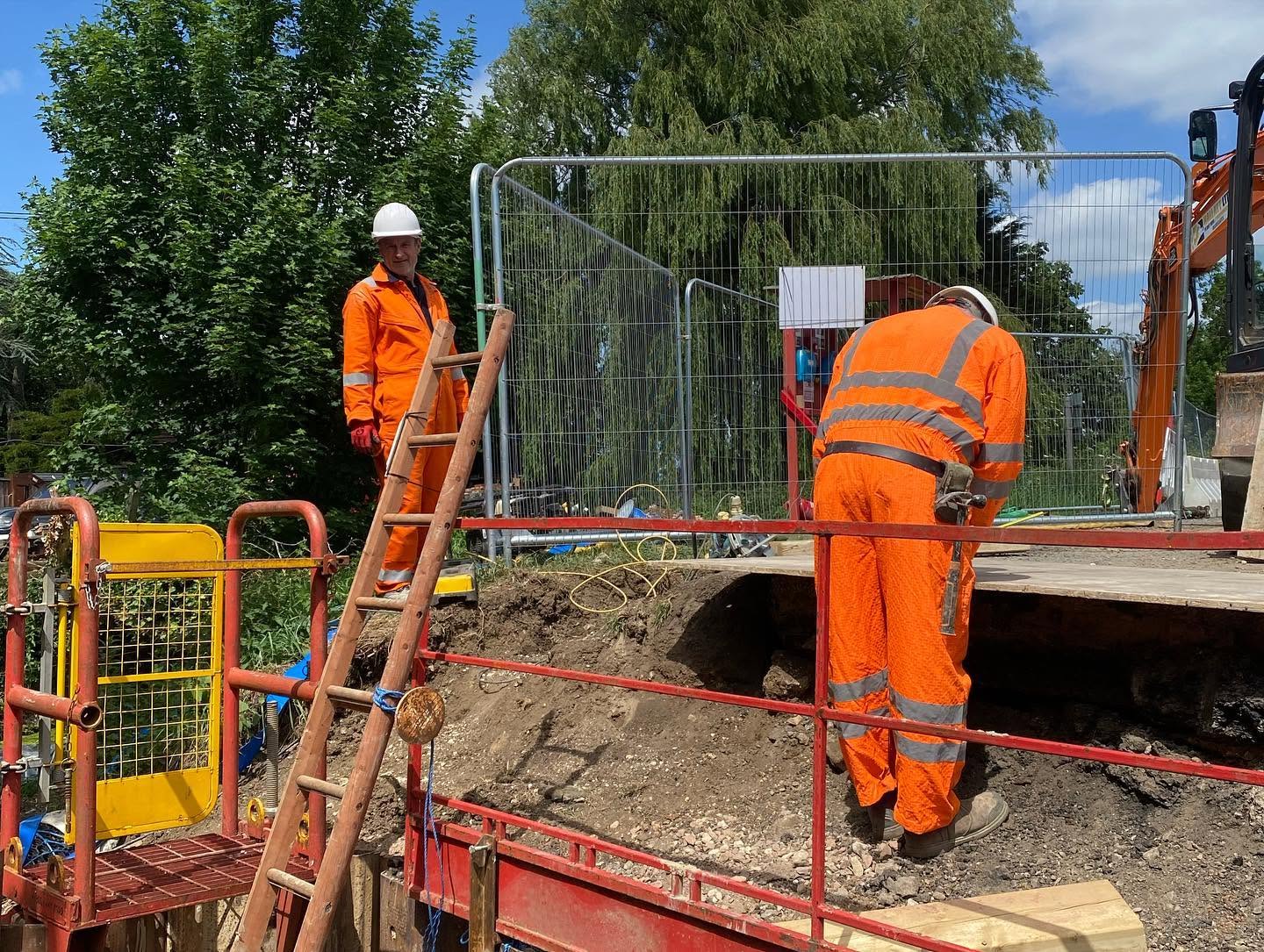
Below-ground structures
Headwall, chamber or wet well: what's the difference
Different jobs need different structures. Here's what we mean by each one.
Headwall
A reinforced concrete or brick structure built at each end of a culvert to hold the surrounding ground back and stop the pipe eroding. Usually reinforced, shuttered and poured in place, exactly like a small retaining wall.
Chamber & manhole
A below-ground access point, precast or poured in situ, giving access to a pipe, cable or main for maintenance. Sized and detailed to the utility company's or council's own specification.
Wet well
A sealed chamber that collects water or sewage before it's pumped onward, built watertight to the same standard as a swimming pool shell.
Interceptor tank
A precast or poured tank that separates oil, fuel or silt from surface water before it discharges, usually installed where a site drains onto a public watercourse.
All of it starts with the same groundworks and plant we run on every job, and the same reinforcement fixed to the engineer's drawing.
How it runs
From site survey to a made-good road or site
01
Survey & traffic management
We check the site, arrange any road closures or permits, and plan the dig.
02
Excavate & expose
Dig down to the existing culvert, chamber or main, safely and to the right depth.
03
Form, reinforce & pour
Headwalls, chambers or bases built and poured the same way as any other structure.
04
Reinstate
Backfilled, compacted and the road or ground made good.
Get in touch
Request a Quotation
Send us your drawings and we'll get back to you quickly.
07872 015713